
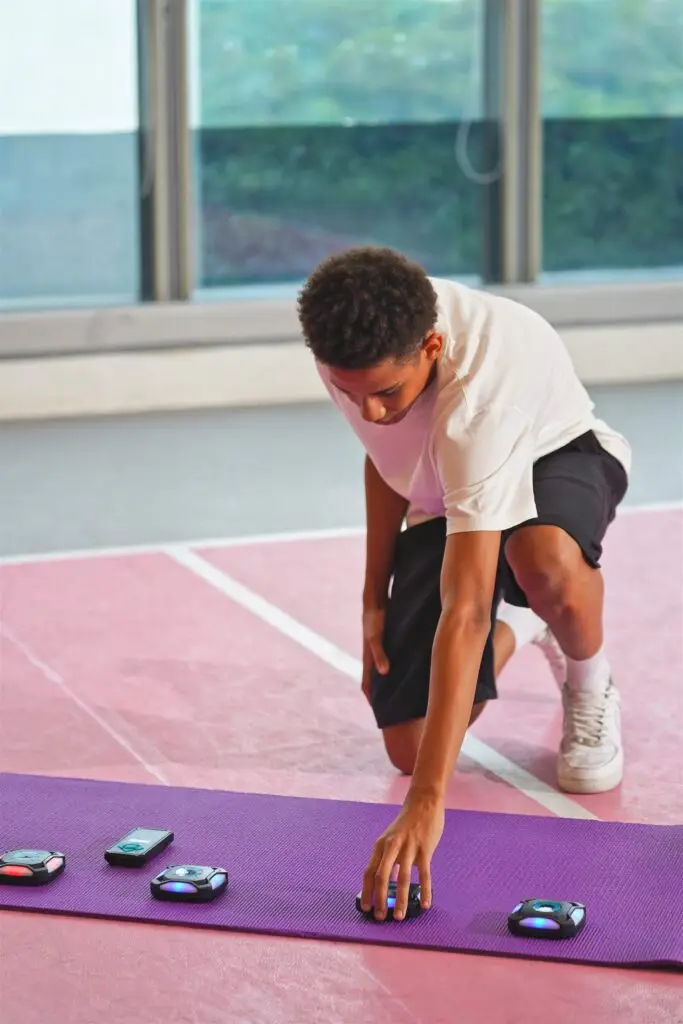
Reaction time isn’t something most people train on purpose. We stretch before a run, we lift weights for strength — but the split-second reflex that lets a goalkeeper stop a shot, or a driver brake in time, rarely gets its own workout. The good news: like any physical skill, it responds fast to practice. A few minutes a day of the right drills can measurably sharpen how quickly your brain turns “see it” into “react to it.”
Here are five drills that build real reaction speed — using nothing more than floor space, and in a couple of cases, some kind of light or sound cue to react to.
1. The Random Light Drill
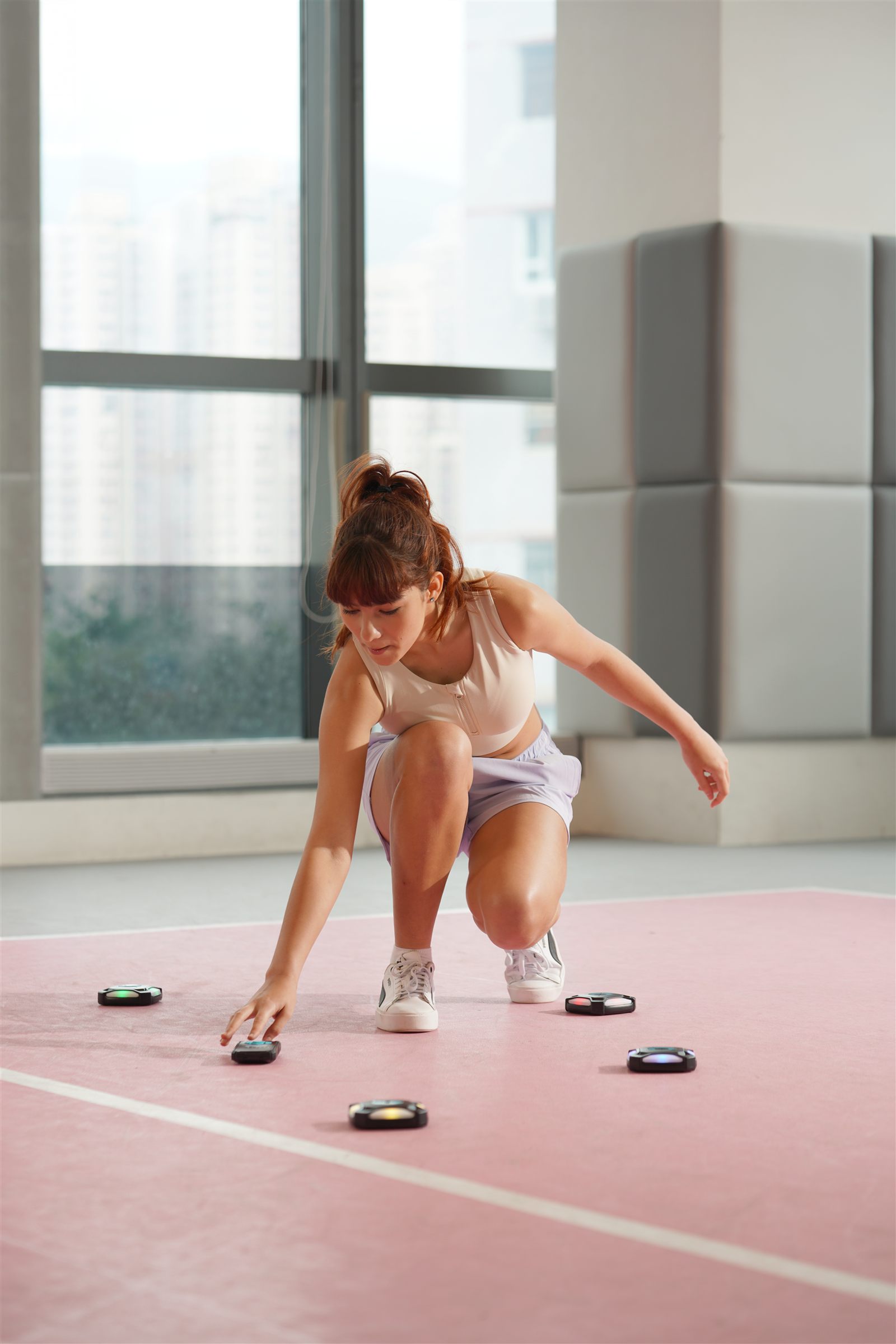
This is the gold standard of reaction training — and the same method sports scientists use to test athletes. Scatter 4–6 markers or targets around a space. Each one lights up (or gets called out) in random order; your job is to get to it and touch it as fast as possible before the next one fires.
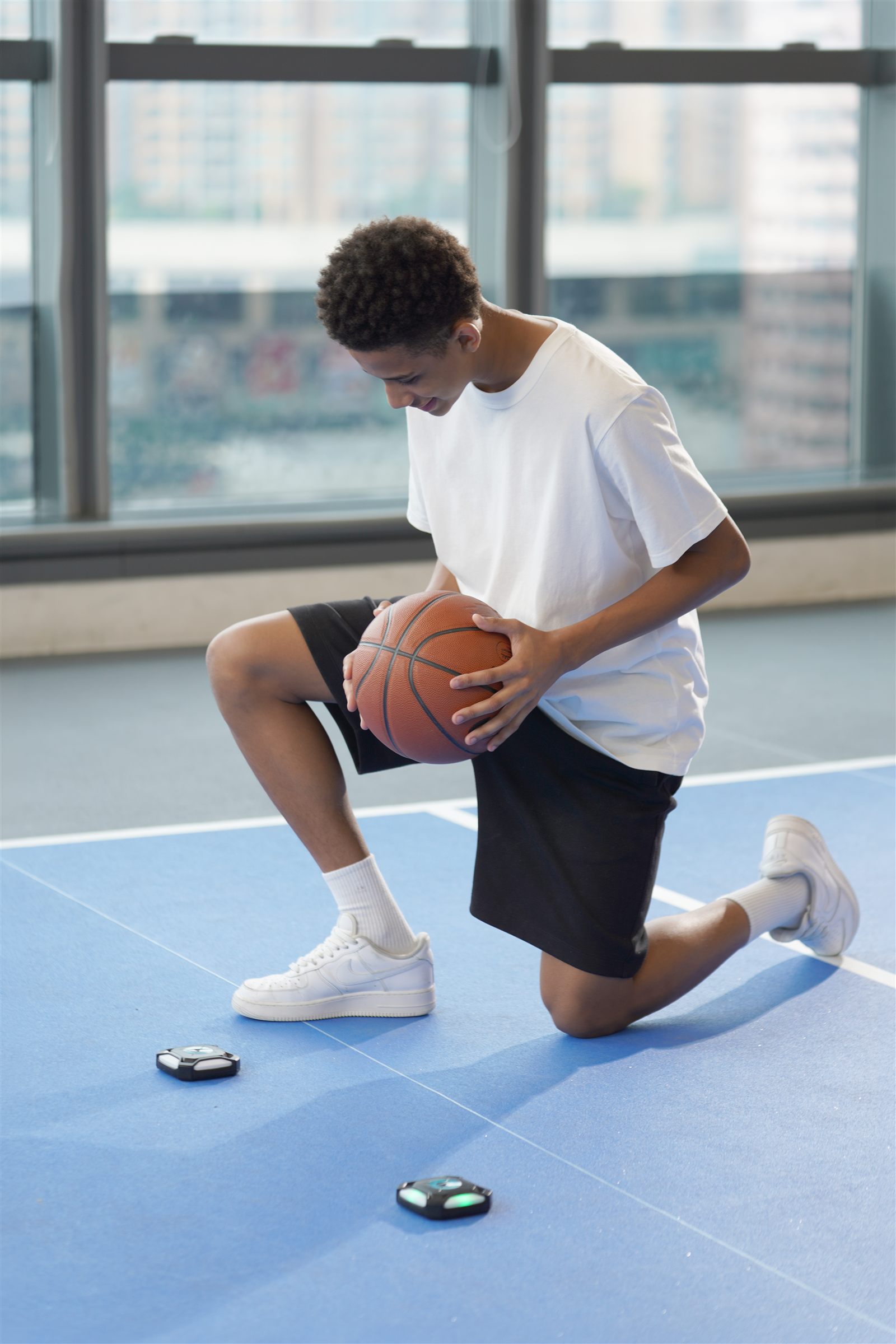
The randomness is the whole point — your brain can’t anticipate the pattern, so every rep is a genuine reaction, not muscle memory. Doing this with actual light-up targets removes the biggest friction point of the drill: normally you’d need a training partner calling out targets, which means someone else has to commit their time too. A set of wireless light-up pods (this is exactly what ActivePod’s REFLEX and FAST modes are built for) turns it into something you can run solo, any time, with the device handling the randomization and timing for you.
2. Reactive Sprint Starts
Start in a low athletic stance — like a sprinter’s set position. Instead of counting yourself down, react to an external cue: a whistle, a clap, or a light turning on. The moment you perceive it, explode forward.
This drill trains something subtly different from pure hand-eye reflex — it’s whole-body reaction time, the kind that matters in field sports where you’re reacting with your legs, not just your fingers. Three sets of 5–6 reactive starts is enough to feel the burn without overtraining the nervous system (reaction drills fatigue your focus faster than your muscles).
3. Color/Pattern Discrimination
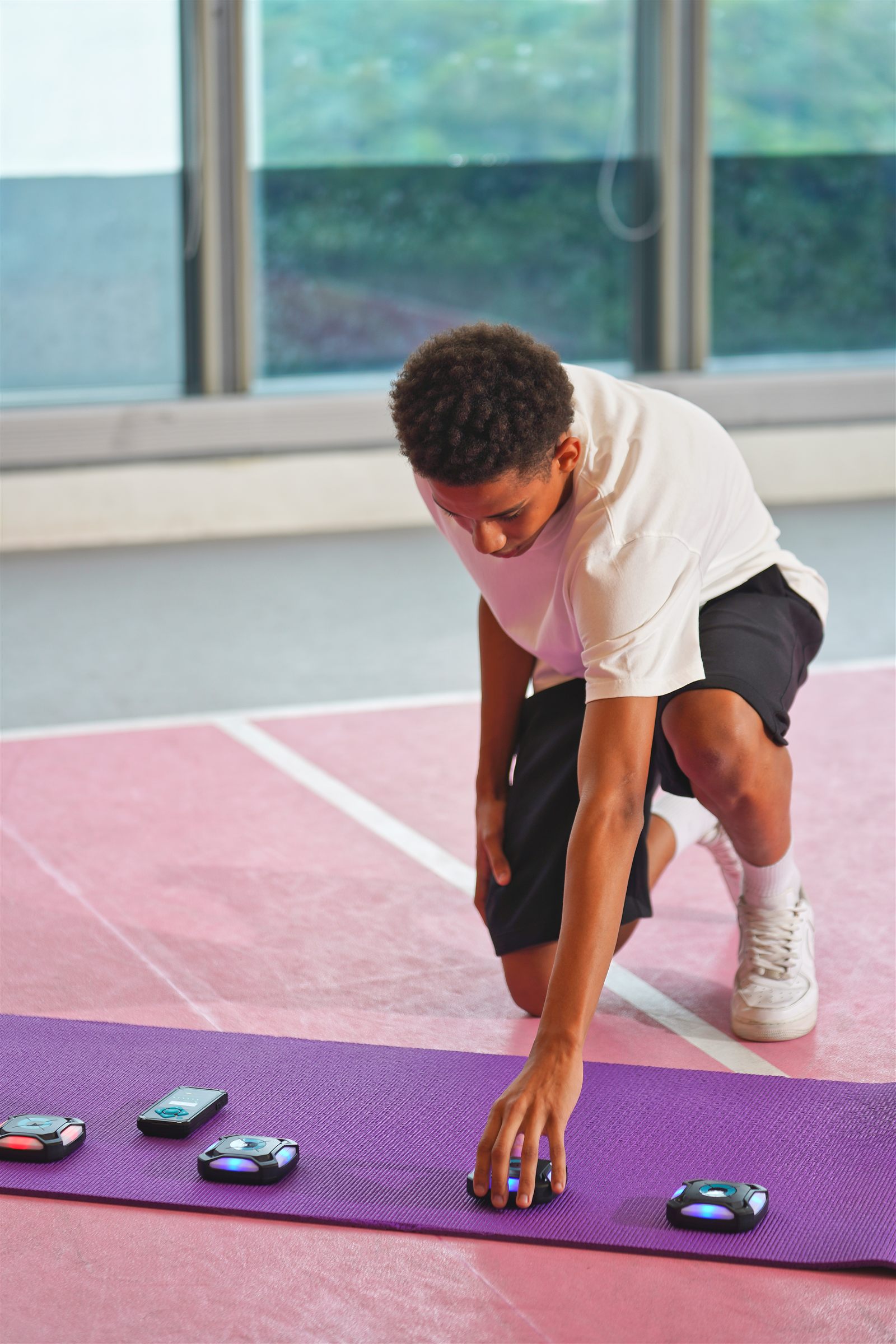
Raw speed is only half of reaction training — the other half is decision speed. This drill adds a filter: instead of reacting to everything, you only react to a specific trigger among several similar ones. Think “tap only the green light, ignore the red ones,” or “catch the ball only if it’s thrown with your dominant hand.”
This is closer to real-world reaction — a goalkeeper doesn’t react to every player, just the one with the ball. It’s also the exact mechanic behind games like Simon Says, and why they’re secretly effective training, not just kids’ entertainment.
4. Plank-to-Reach
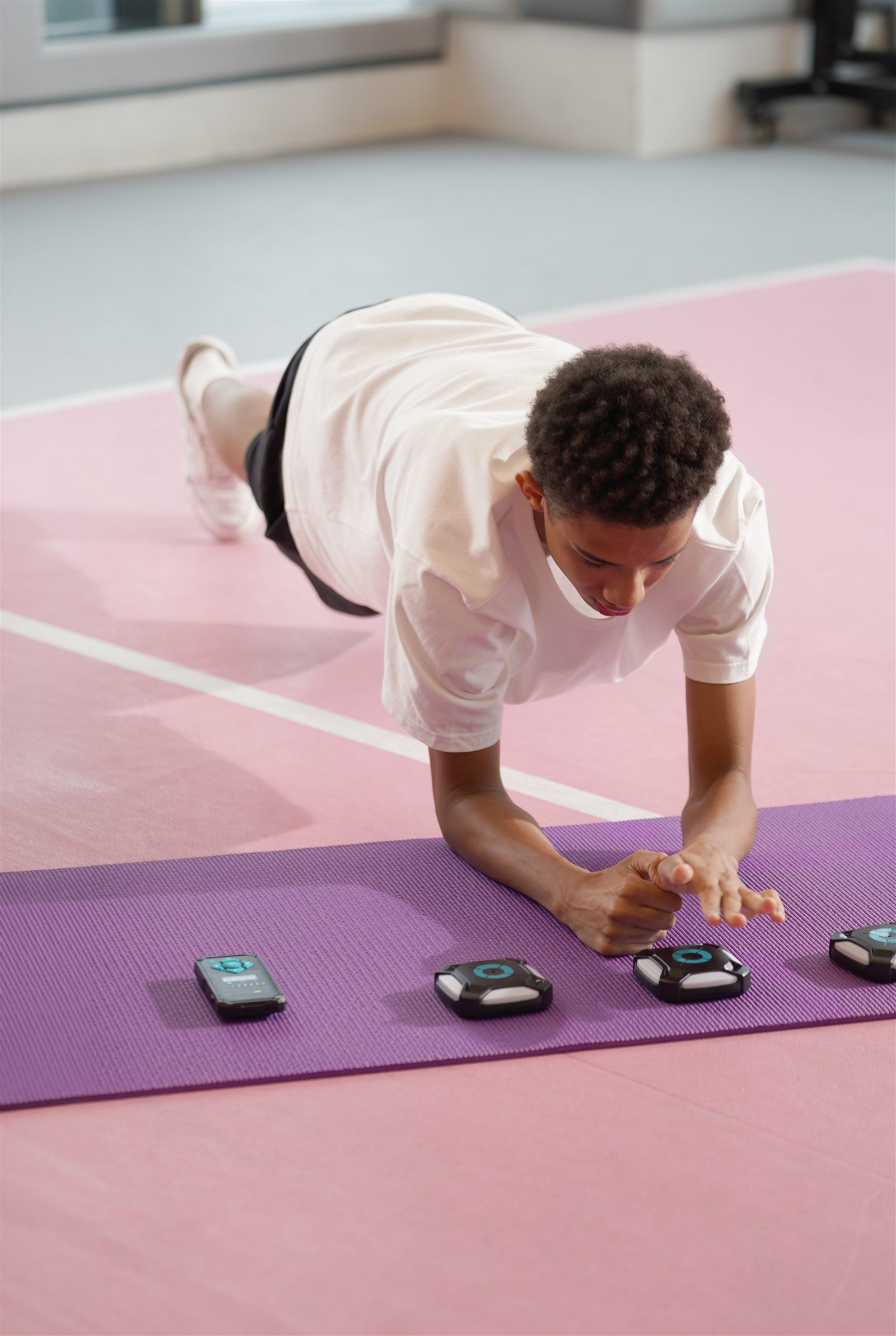
Reaction training doesn’t have to mean standing up. Hold a plank position with a target just within arm’s reach — when it lights up or you get the cue, tap it with one hand without collapsing your hips, then reset. This combines core stability under fatigue with upper-body reaction speed, which is a much closer simulation of real athletic movement than either drill alone.
5. Escalating Speed Rounds
Once the basic reaction is automatic, the fastest way to keep improving is to progressively shrink your reaction window. Start at a comfortable pace, then increase the speed of the cue every 10 successful reps — whether that’s a partner calling faster, or (again) a device that ramps difficulty automatically as you improve.
The key here is tracking a number — makes it a game against your own previous best, which is a much stronger motivator than “reaction training” in the abstract. Most people improve their measurable reaction time by 10–15% within two to three weeks of doing this a few times a week.
Do You Need Equipment?
No — a training partner with a stopwatch and some chalk marks on the floor can run every drill above. But most people don’t stick with reaction training because coordinating a partner every session is friction, and generic drills get boring fast without a way to track improvement.
That’s the gap something like ActivePod is built to close: six wireless, light-up pods and a remote that randomizes targets, tracks your time or score, and ramps difficulty automatically — so drills 1, 2, and 5 above are ready in about ten seconds, solo or with friends, indoors or out. It won’t replace the discipline of showing up and doing the reps. But it removes most of the reasons people don’t.